

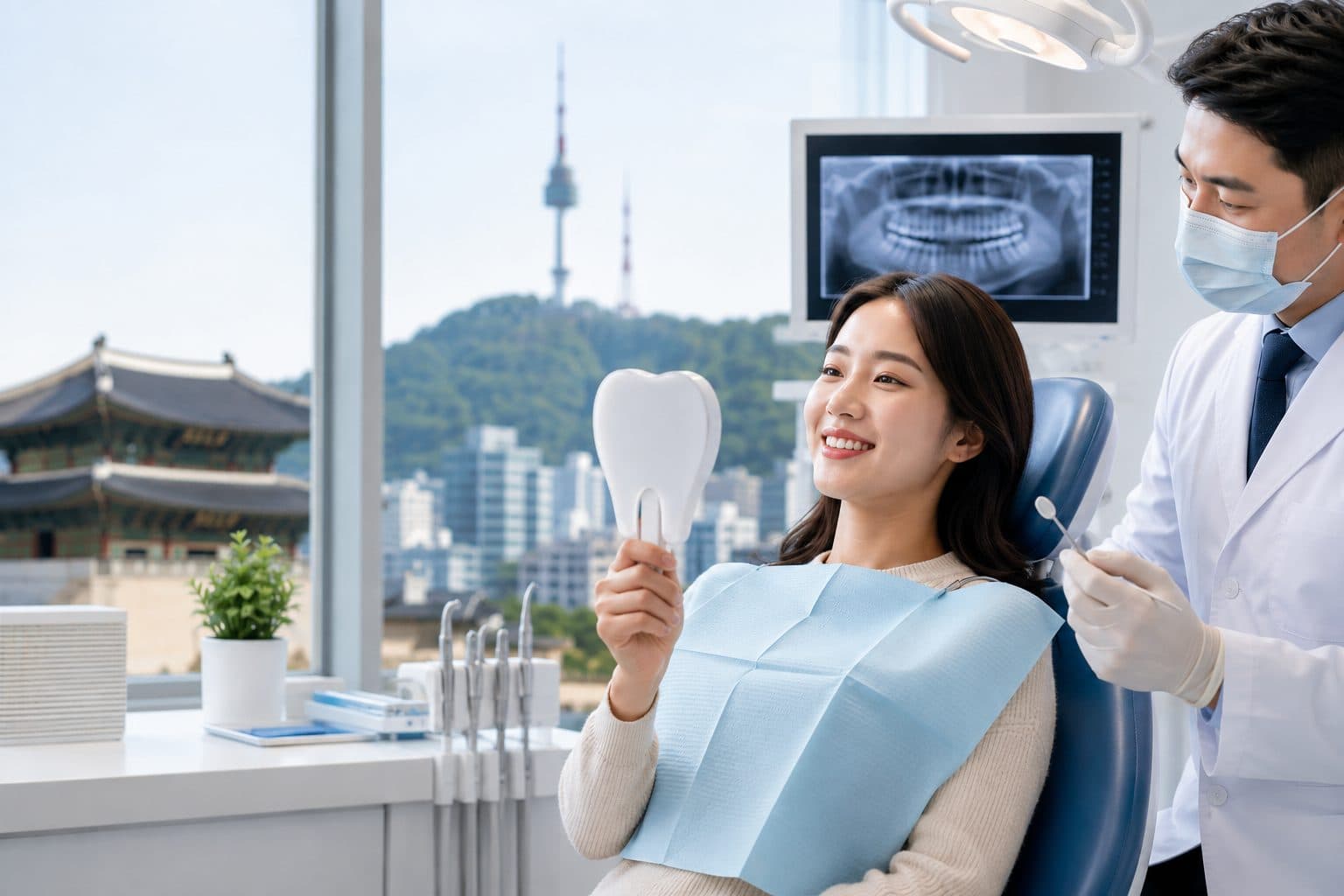
Booking dental treatment in Korea can look straightforward from a clinic menu. Scaling, whitening, veneers, crowns, implants and clear aligners may all appear beside package prices and “one-day” claims, even though they differ substantially in purpose, reversibility, laboratory work, healing and follow-up.
Foreign patients have another layer of decisions to make. You need to know whether the clinic is set up to receive international patients, who will perform the treatment, whether interpretation extends beyond reception, what the quotation actually includes and who will manage a problem after you fly home.
This guide helps you compare Korean dental care by clinical purpose and travel timeline. It explains what can fit into a short stay, which treatments usually need staged care, how to evaluate a clinic and what to confirm before paying a deposit or finalising flights.
Planning Dental Care in Korea? Explore current dental listings through Fornur, then request a free consultation to confirm the treatment, clinic availability and next steps before booking. |
Quick Answer: Can Foreigners Get Dental Treatment in Korea?
Yes. Foreign patients can access preventive, cosmetic, restorative, orthodontic and implant dental care in Korea. The right starting point is a dental examination and diagnosis, not a package name or social-media result.
Routine scaling or professional whitening may fit into a short visit. Veneers and crowns can require tooth preparation, laboratory production and bite adjustments. Root-canal treatment may take more than one appointment.
Dental implants and clear aligners usually involve healing or monitoring over months, so a return visit or coordinated follow-up may be necessary.
Before booking, confirm the clinic, treating dentist, exact procedure and materials, number of visits, complete price, aftercare and record-sharing process. Korea’s official Medical Korea registration system and registered-hospital directory provide useful checks for institutions serving foreign patients.
Key Takeaways
“Korean dental” is a broad search term covering treatments with very different purposes and timelines.
A low headline price is not meaningful until the examination, imaging, materials, temporary work, laboratory fees and follow-up are clear.
One-day treatment may mean a single whitening visit, same-day milling or a temporary implant tooth; it does not always mean the permanent treatment is complete.
Veneers and crowns involve permanent tooth preparation, while implants and aligners require long-term planning and maintenance.
International patients should leave Korea with written records and a realistic plan for adjustments, complications and future care.
What Does Korean Dental Care Usually Include?
People searching for “korean dental” services are often comparing several needs at once: routine cleaning, a brighter smile, repair of a damaged tooth, replacement of a missing tooth or alignment of crowded teeth. Those goals should not be collapsed into one cosmetic package.
The table below is a planning guide rather than a diagnosis. Your dentist must examine the teeth, gums and bite before confirming suitability or treatment sequence.
Treatment | Main Role | Planning Around a Trip |
Dental scaling | Plaque, calculus, surface staining and gum maintenance | Often suitable for a short visit; deeper periodontal care may require more than routine cleaning. |
Professional whitening | Lightening suitable natural teeth | May fit one appointment; does not whiten veneers, crowns, fillings or implant restorations. |
Porcelain veneers | Selected colour, shape, chip or small-gap concerns | Usually irreversible; may require preparation, temporary veneers and a final fitting. |
Ceramic crowns | Structurally weakened, heavily filled, cracked or root-canal-treated teeth | Requires greater tooth preparation; material and laboratory timeline should be specified. |
Root-canal treatment | Inflamed or infected tissue inside a tooth | Can require multiple appointments and a separate final restoration. |
Dental implants | Replacement of one or more missing teeth | Surgical and restorative stages may be separated by months of healing. |
Invisalign clear aligners | Selected crowding, spacing and bite concerns | Requires daily wear, repeated monitoring and retainers after active treatment. |
Smile makeover | A coordinated plan involving several concerns | The timeline depends on the procedures included; it is not one standard treatment. |
Routine Cleaning, Gum Care and Whitening
A preventive appointment may begin with dental scaling and professional cleaning. Scaling removes plaque and hardened calculus from the teeth and around the gumline. It may also remove some surface staining, but it does not bleach the natural tooth structure.
Patients with deeper gum pockets or periodontal disease may need more extensive treatment than a routine cleaning.
Professional teeth whitening in Korea is a different procedure. It uses a bleaching agent to lighten suitable natural teeth, and temporary sensitivity can occur.
The American Dental Association’s whitening guidance notes that restorations do not respond like natural teeth, so whitening should be planned before the final shade of new veneers or crowns is chosen.
A short appointment does not remove the need for an examination. Untreated decay, gum inflammation, cracked teeth or significant sensitivity can change whether whitening or cosmetic cleaning is appropriate.
Veneers, Crowns and Smile Makeovers
Porcelain veneers cover mainly the visible front surface of selected teeth. They can change colour, shape and proportions, but they do not physically move teeth or repair every structurally damaged tooth.
The ADA’s patient guidance on veneers explains that enamel is usually removed and the treatment is generally not reversible.
Ceramic crowns cover more of a prepared tooth and are commonly considered where greater structural protection is required. A crown may follow root-canal treatment, restore a heavily filled or cracked tooth, or form the visible restoration attached to an implant. The dentist should still explain whether a filling, inlay, onlay or veneer could preserve more natural tooth structure.
A smile makeover is not a fixed veneer package. It is a coordinated plan that may combine cleaning, whitening, alignment, veneers, crowns, implants or treatment of existing disease. Ask for a tooth-by-tooth plan rather than accepting a single before-and-after concept without understanding what will be altered.
Root-Canal Treatment and Preserving a Natural Tooth
Root-canal treatment removes inflamed or infected pulp from inside a tooth before the canals are cleaned, filled and sealed. The American Association of Endodontists explains that the purpose is to treat the inside of the tooth while keeping the natural roots in place.
The final restoration is a separate decision. Some teeth require a filling, while others need a core build-up, post, onlay or crown. Ask whether the quotation covers the root canal only or also includes the temporary filling and permanent restoration.
Photographs cannot confirm whether a painful tooth is restorable. The examination may change the original plan.
Dental Implants Require a Surgical and Restorative Plan
Dental implants replace missing teeth through an implant fixture in the jaw, an abutment and a crown, bridge or denture. The US Food and Drug Administration’s implant guidance stresses the importance of discussing medical history, smoking and long-term care because healing and maintenance affect outcomes.
A “one-day implant” may involve extraction, implant placement and a temporary tooth for selected patients. The permanent crown can still follow after healing, and grafting may extend the timeline.
Request the implant manufacturer, model and component details in writing so another dentist can maintain or repair it later.
Invisalign and Clear Aligners Are Long-Term Treatment
Invisalign clear aligners may be considered for selected crowding, spacing and bite concerns. The American Association of Orthodontists’ aligner guidance explains that aligners move teeth gradually and require professional assessment and monitoring.
Treatment continues beyond the first scan and may require attachments, progress reviews, refinement aligners and retainers.
Before starting, confirm who will monitor treatment after you leave, how trays will be delivered and what happens if an attachment breaks.
What Does “One-Day Dentistry” Really Mean?
One-day dentistry may mean whitening in one visit, same-day digital milling, an in-house veneer workflow or implant placement with a temporary tooth.
It does not reveal what is temporary, what needs healing or whether a later review is required. Ask for a visit-by-visit schedule.
Confirm what will be completed on day one, which stages follow and when the final result will be checked.
Do Not Book From the Package Name Alone Share the treatment you are considering, existing dental work, symptoms and travel dates. Fornur can help you request a clinic consultation and itemised plan before you commit. |
How to Choose a Korean Dental Clinic
Start by confirming the legal clinic name, location and whether it appears in the official Medical Korea directory of registered institutions serving foreign patients. Medical Korea states that registered institutions have been required to hold medical malpractice liability insurance since 2016.
Registration and accreditation are different. Korea’s Korean Accreditation Program for Hospitals Serving Foreign Patients evaluates participating institutions against international-patient service and patient-safety criteria; not every registered clinic holds this accreditation.
Confirm the treating dentist and who performs each stage. Interpretation should cover consultation, consent and aftercare, not only reception.
Be cautious if the clinic will not identify the material, implant system or aligner package, pressures you to add treatments or gives a final diagnosis from photographs alone.
How to Compare Korean Dental Prices Properly
A useful quote is itemised. Headline prices can exclude imaging, temporary work, laboratory charges, grafting, retainers, medication, follow-up or tax.
Quote Area | What to Confirm |
Diagnosis and records | Clinical examination, photographs, X-rays, CT or digital scans |
Treatment itself | Exact procedure, tooth numbers, product or material, quantity and provider |
Temporary stage | Temporary filling, crown, veneer, denture or implant tooth |
Laboratory and components | Veneer or crown material, implant fixture and abutment, aligner package or retainers |
Additional care | Root canal, post, gum treatment, extraction, bone graft, medication or sedation |
Follow-up | Adjustment visits, refinements, replacement components, warranty terms and record copies |
Do not rely on a generic online range. The examination determines the actual treatment, quantity and complexity.
Plan Travel, Records and Follow-Up Before Treatment
The NHS treatment-abroad checklist advises patients to factor in the possibility of extending a stay, making return trips and arranging suitable insurance. Standard travel insurance may not cover planned treatment or complications, so check the policy rather than assuming protection.
Cleaning or whitening may fit a short stay, while restorations need time for scanning, production and adjustment. Implants can require months of healing and aligners need repeated monitoring.
Bring recent records and disclose medicines, allergies, medical conditions and previous dental work. Before leaving, request imaging, treatment notes, material or implant details, prescriptions and aftercare instructions.
Questions to Ask Before You Book
1. What diagnosis or dental concern is the proposed treatment addressing?
2. Who will perform each stage, and what are their relevant qualifications?
3. Is the clinic registered to receive foreign patients, and does it hold any additional accreditation?
4. What exact product, material, implant system, aligner package or laboratory method will be used?
5. Is any part of the treatment irreversible, and are there more conservative alternatives?
6. How many visits are expected, and which steps are temporary or require healing?
7. What does the itemised quotation include and exclude?
8. What side effects or complications should I watch for after leaving Korea?
9. How will adjustments, emergency advice and long-term follow-up be handled?
10. Which records will I receive for my dentist at home?
How Fornur Helps Foreign Patients Explore Dental Care
Fornur helps foreigners explore medical and beauty services in Korea, review clinic-provided treatment information and request consultations with available clinic partners. Start with the Dental category to compare current listings, then open the treatment most closely related to your concern.
A listing shows what a clinic advertises, but the dentist must confirm diagnosis, suitability, materials, visits, price and follow-up after examination.
How This Guide Was Prepared
This guide is designed to help foreign residents and visitors understand common questions before making a decision. Details should always be confirmed directly with the relevant provider or an appropriately qualified professional.
- Author
- Mustafa
- Last reviewed
- August 6, 2026
Frequently asked questions
Free clinic consultation
Share your goals and let Forpang help review available clinic options.