
.jpg&w=3840&q=75)
.jpg&w=3840&q=75)
.jpg&w=3840&q=75)
 1 / 5
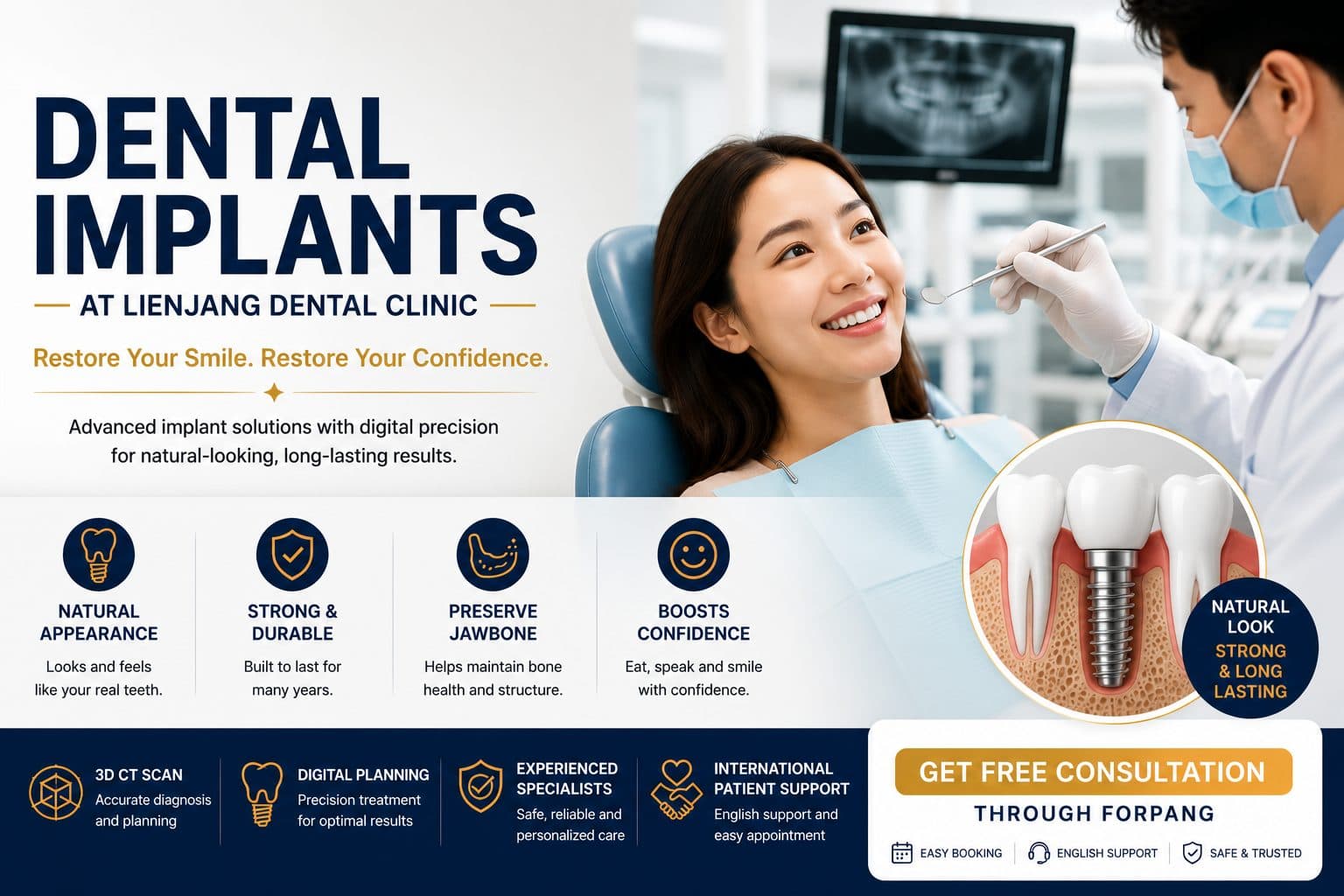
1 / 5Dental implants at Lienjang Dental Clinic may be considered when one or more teeth are missing or when a damaged tooth cannot be preserved predictably.
A dental implant is surgically placed into the jawbone to support a replacement tooth. The complete restoration normally consists of an implant fixture within the bone, an abutment above the gum and a custom crown, bridge or denture.
Lienjang Dental Clinic uses dental imaging, 3D CT assessment, digital planning and an in-house laboratory to support implant placement and restoration design.
The clinic also offers a one-day implant pathway for selected patients. This may allow extraction, implant placement and a temporary tooth to be completed during the initial visit. The permanent final restoration is normally fitted after the implant has completed an appropriate healing period.
Fornur helps international visitors explore dental treatments in Korea and submit consultation enquiries to available clinic partners.
The consultation enquiry is free. Dental examinations, imaging, surgery, bone grafting, implant components, temporary teeth and final restorations are charged separately.
Dental implants at Lienjang Dental Clinic provide a surgical option for replacing selected missing teeth.
The implant fixture is placed in the jawbone and allowed to heal. Once sufficient stability and healing have been achieved, an abutment and custom replacement tooth are connected to the implant.
Treatment can replace one tooth, support a bridge replacing several teeth or help stabilise a larger dental prosthesis.
Not every patient is suitable for immediate placement or a one-day temporary tooth. Bone volume, gum health, infection, medical history, smoking, bite forces and implant stability must be assessed first.
A written treatment plan should identify the implant system, procedure stages, temporary restoration, healing period, final prosthesis, number of visits and complete itemised cost.
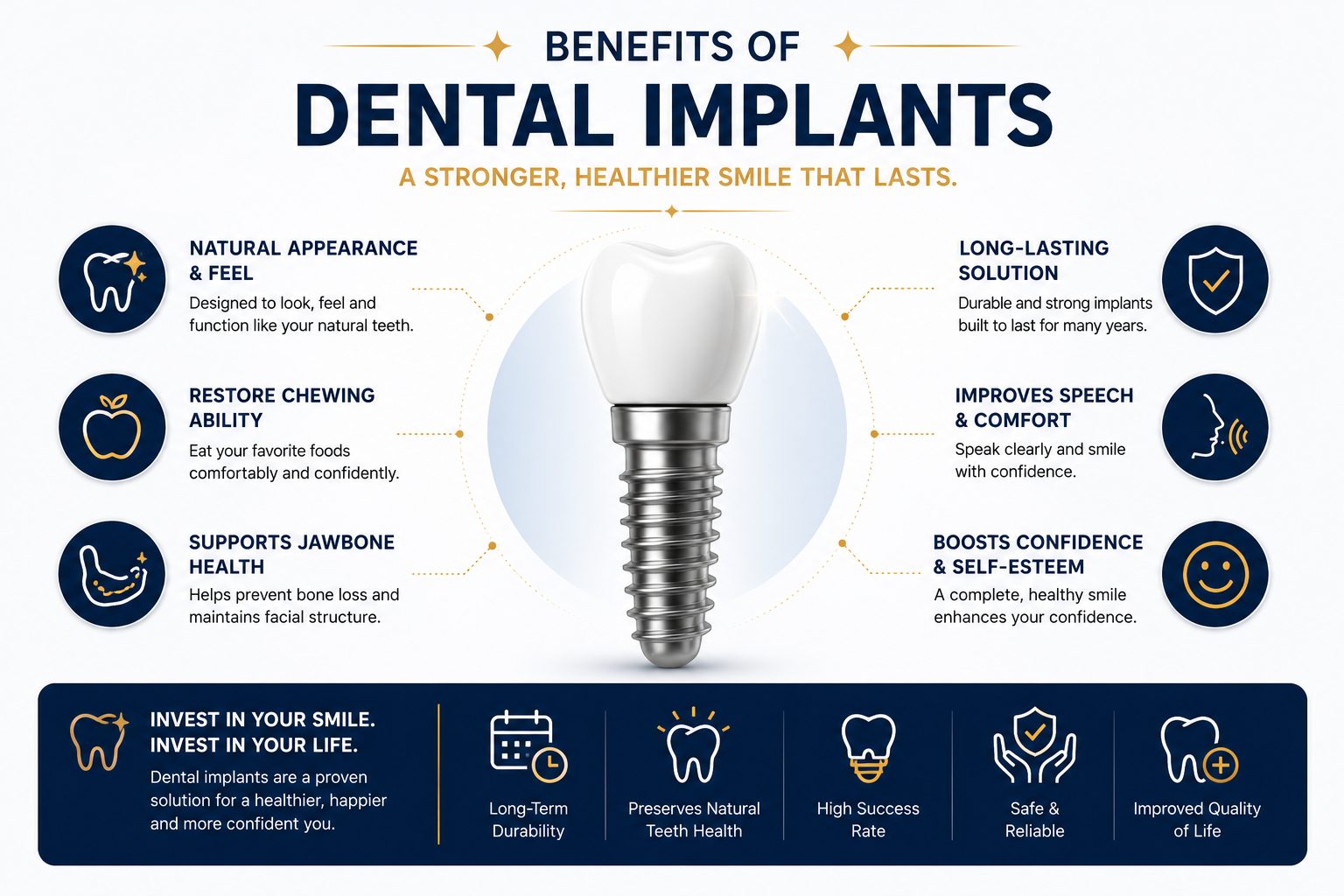
The phrase “dental implant” is often used to describe the complete replacement tooth, but several separate components may be involved.
Component | Purpose |
Implant fixture | The component surgically placed within the jawbone |
Abutment | Connects the implant fixture to the visible restoration |
Crown | Replaces one visible tooth |
Implant bridge | Replaces several teeth using implant support |
Implant-supported denture | Uses implants to improve the support or retention of a larger prosthesis |
Temporary restoration | Provides temporary appearance or limited function during healing |
The FDA’s patient information on dental implants explains that implant systems normally include an implant body and abutment supporting a crown, bridge or denture.
The fixture, abutment and crown should not be treated as one undefined item. Each component should be identified in the quotation.
A dental implant consultation may be appropriate when a tooth is already missing, cannot be restored or when a denture requires additional support.
Suitability depends on the condition of the entire treatment area rather than only the visible gap.
The dentist should assess the available bone, gums, neighbouring teeth, bite, implant space and nearby anatomical structures. Overall health, medicines, smoking, teeth grinding and previous periodontal disease can also influence healing and long-term maintenance.
Active dental infection or uncontrolled gum disease may need to be treated before implant surgery.
Where bone volume is insufficient, bone grafting or another preparatory procedure may be recommended.
Dental implants may require additional caution or medical coordination for patients with conditions that affect healing, bleeding, immune function or bone metabolism.
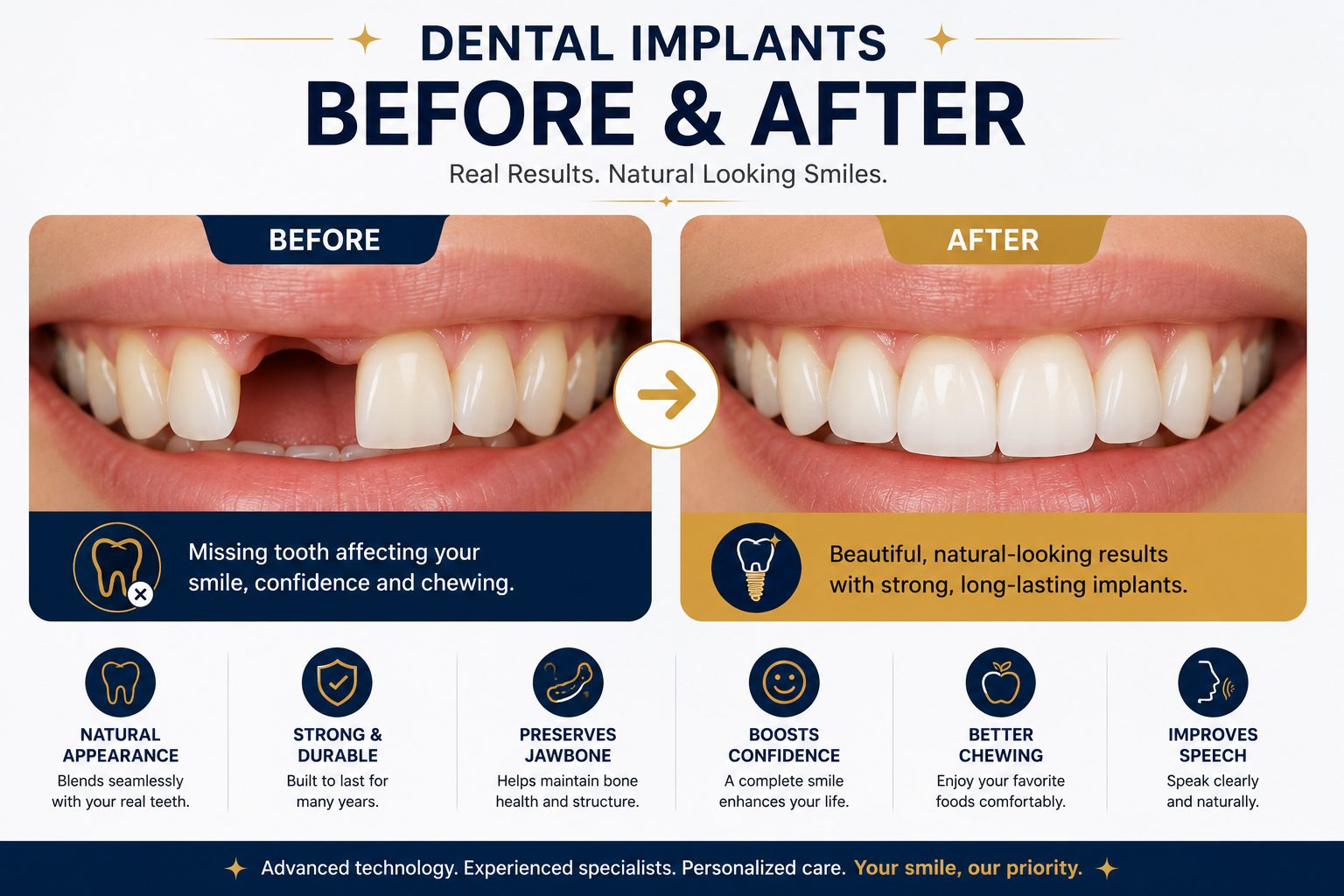
A damaged tooth should be assessed before extraction is selected.
In some cases, decay or infection can be treated and the tooth restored. In others, the tooth may have too little healthy structure, inadequate support or a fracture that prevents predictable preservation.
Patients with a painful, infected or deeply damaged tooth can compare root canal treatment at Lienjang Dental Clinic.
The dentist should explain the reasonable options for preserving the natural tooth before recommending extraction and implant placement.
An implant can be a suitable replacement when a tooth cannot be saved, but extraction is irreversible and should not be presented as the automatic first option.
Different tooth-replacement treatments have different advantages, limitations and maintenance requirements.
Treatment | General approach | Important consideration |
Dental implant | Surgically placed implant supports a crown or larger prosthesis | Requires surgery, suitable bone and healing |
Dental bridge | Replacement tooth is supported by neighbouring teeth or implants | May require preparation of nearby natural teeth |
Removable denture | Removable appliance replaces one or several teeth | Stability, comfort and maintenance vary |
Implant-supported denture | Implants provide additional support for a larger prosthesis | Requires surgery and may involve several implants |
The appropriate treatment depends on the number of missing teeth, condition of the remaining teeth, available bone, health, budget and maintenance preferences.
The first clinical appointment should include an examination of the teeth, gums, bite and missing-tooth area.
Dental X-rays and 3D CT imaging may be recommended to assess bone dimensions and the position of nearby structures such as nerves and the maxillary sinus.
Lienjang Dental Clinic currently promotes 3D CT assessment, digital oral scanning and surgical-guide planning for selected implant cases.
Digital planning can help the dentist assess the proposed implant position, depth and direction. It does not eliminate surgical risk or guarantee exact placement, successful healing or a complication-free result.
Before surgery, the treatment plan should confirm whether the existing tooth can be preserved, whether extraction is required and whether implant placement will be immediate or delayed.
.jpg)
The dentist reviews the missing tooth, oral health, medical history and treatment objectives.
The examination may include X-rays, 3D CT imaging, digital scans and photographs.
The plan should identify the implant site, implant system, need for extraction or grafting, temporary tooth, healing period and final restoration.
If a damaged tooth remains in the implant site, it may need to be extracted.
Implant placement may sometimes occur during the same appointment. In other cases, the extraction site must heal before the implant is placed.
The decision depends on infection, bone condition, gum health and whether sufficient implant stability can be achieved.
Local anaesthetic is normally used during implant surgery.
The dentist prepares the planned site in the jawbone and places the implant fixture. A surgical guide may be used in selected cases.
The implant position should account for the surrounding bone, gums, neighbouring teeth, future crown and the patient’s bite.
A temporary tooth may be provided while the implant heals.
It may be attached to the implant, supported by nearby teeth or provided through another temporary method.
A temporary restoration should not be assumed to provide unrestricted chewing function. The dentist should explain any pressure or dietary limitations.
After placement, the surrounding bone needs time to heal around the implant. This process is known as osseointegration.
Healing commonly takes several months, although the precise period varies according to the implant site, bone condition, grafting, implant stability, general health and smoking status.
The implant should not receive excessive pressure during the healing phase unless the treatment plan specifically allows controlled loading.
After sufficient healing, the abutment and final crown, bridge or other prosthesis are fitted.
The final restoration should be designed around the implant position, gum shape, neighbouring teeth, bite and ability to clean the area.
Patients can learn more about the visible restorative component through ceramic crowns at Lienjang Dental Clinic.
Lienjang Dental Clinic offers a one-day implant pathway for selected patients.
According to the clinic’s current pathway, the initial appointment may include extraction, limited bone grafting where suitable, implant placement and a temporary prosthesis.
The permanent final prosthesis is placed after healing, which the clinic currently describes as approximately two to six months later.
A one-day implant therefore does not usually mean that the permanent implant treatment is completed in one day.
Immediate placement is more likely to be considered when sufficient strong bone remains, gum health is acceptable and only limited grafting is needed.
Patients with extensive infection, major bone loss, inadequate stability or complex treatment requirements may require staged treatment.
International visitors should request a visit-by-visit schedule before arranging flights.
Bone volume can reduce after tooth loss, infection, trauma or previous dental treatment.
Where the implant site does not contain enough suitable bone, grafting may be recommended to improve the treatment foundation.
Depending on the case, bone grafting may be completed before implant placement or during the same procedure.
The treatment plan should identify the graft material, treatment area, whether grafting is simultaneous or staged and how it affects the recovery period.
Grafting is not automatically included in an implant price.
Patients should also ask whether a sinus-related procedure or additional gum treatment is required.
Lienjang Dental Clinic currently identifies Osstem and Megagen among the implant systems used within its implant services.
This does not mean that every patient will receive the same manufacturer or model.
Before treatment, request written confirmation of the implant manufacturer, product line, implant dimensions, abutment and final restoration material.
Keep this information with your dental records. It can be important if the implant requires maintenance or component replacement after returning home.
The implant brand should not be selected solely on marketing language. The dentist should explain why the proposed system is suitable for the treatment area and planned restoration.
Lienjang Dental Clinic currently lists Head Doctor Choi Jong Myung as an oral and maxillofacial surgery and implant specialist with education and residency training through Yonsei University and certification by South Korea’s Ministry of Health and Welfare.
This does not confirm that he personally performs every implant procedure.
The clinic should identify the treating dentist before surgery and provide the practitioner’s relevant qualifications and role in the case.
Lienjang also operates an in-house dental laboratory. Direct communication between the dentist and technician can support planning of the abutment, crown shape, bite and shade.
Technology and specialist credentials support treatment planning, but they do not guarantee implant integration or long-term success.
Local anaesthetic is generally used during implant placement.
Patients may feel pressure, movement or vibration during the procedure. Sedation may be discussed in selected cases, but it involves separate suitability, monitoring and pricing considerations.
After surgery, swelling, tenderness, bruising and minor bleeding can occur.
The amount of discomfort depends on the number of implants, complexity of surgery and whether extraction or grafting was performed.
Pain should normally become more manageable rather than progressively worse. Increasing pain, swelling or fever should be reported to the clinic.
Follow the clinic’s instructions for cleaning, diet, medication and activity after implant surgery.
Avoid disturbing the surgical area during early healing. The clinic may recommend softer foods and temporary restrictions on chewing over the implant site.
Smoking can interfere with healing and may reduce the likelihood of long-term implant success.
Contact the clinic promptly if bleeding does not settle, swelling begins increasing after initially improving, fever develops or there is discharge, a persistent bad taste or prolonged numbness.
A temporary tooth or implant component that feels loose also requires assessment.
Long-term implant care includes brushing, cleaning between the teeth and professional monitoring.
Patients can include dental scaling and professional teeth cleaning at Lienjang Dental Clinic within an appropriate maintenance programme.
Implants cannot develop natural-tooth decay, but the gums and supporting bone around them can still become inflamed or diseased.
Dental implant placement is surgery and complications can occur.
Possible risks include infection, bleeding, delayed healing, damage to neighbouring teeth or tissue, sinus involvement in the upper jaw and injury to a nearby nerve.
Nerve injury may cause temporary or persistent numbness, tingling or altered sensation.
The implant may fail to integrate with the bone, become loose or require removal.
Prosthetic complications can also occur. The abutment screw may loosen, and the crown, bridge or temporary tooth may chip, wear or fracture.
Inflammation and bone loss can develop around an implant if plaque is not controlled or other risk factors are present.
The FDA’s dental implant guidance advises patients to discuss the potential benefits and risks, general health and smoking history before treatment.
Contact the dental clinic promptly for worsening pain, increasing swelling, fever, discharge, persistent bleeding, a loose implant or prolonged altered sensation.
Urgent medical assessment may be necessary if swelling affects breathing or swallowing, spreads toward the eye or neck or is accompanied by serious illness.
The clinic should provide an emergency contact and clear instructions for obtaining care after normal opening hours.
International patients should understand what support is available after they leave Korea.
Dental implants may restore selected chewing function and replace the appearance of missing teeth.
They can also help support a crown, bridge or denture without relying entirely on neighbouring teeth.
An implant is not identical to a natural tooth and cannot be guaranteed to last for life.
The result depends on bone and gum health, implant position, integration, restoration design, bite, oral hygiene, smoking, medical conditions and ongoing maintenance.
An implant or prosthetic component may eventually require repair, replacement or removal.
The final crown may not match the surrounding natural teeth perfectly under every type of lighting.
The consultation enquiry submitted through Fornur is free. Dental implant treatment is not free.
The total price may depend on the number and location of implants, implant system, extraction, bone condition, grafting, sedation, temporary teeth and final restoration.
Request an itemised quotation confirming:
Cost component | What should be confirmed |
Dental examination | Included or charged separately |
X-rays and 3D CT | Type, necessity and price |
Tooth extraction | Included or additional |
Implant fixture | Manufacturer, model and price |
Abutment | Type and separate cost |
Temporary tooth | Design, restrictions and price |
Final restoration | Crown, bridge or denture material |
Bone grafting | Graft material and treatment area |
Sedation | Method, monitoring and separate charge |
Surgical guide | Included or additional |
Follow-up | Number and timing of reviews |
Warranty | Duration, terms and exclusions |
Tax | Included or additional |
Do not assume that an advertised implant price includes the fixture, abutment, crown, extraction, grafting and temporary tooth.
The free consultation enquiry allows you to share the missing-tooth area, symptoms, previous dental treatment, available records and preferred appointment dates through Fornur.
Photographs and existing X-rays may assist initial communication but cannot replace a direct clinical examination.
The clinic may require new imaging before confirming implant suitability, bone condition, grafting requirements, number of visits and complete price.
Examination, CT imaging, implant surgery, grafting, sedation, temporary teeth, abutments, crowns and follow-up may carry separate charges.
The free consultation must not be described as free implant surgery or a free clinical diagnosis.
Clinic: Lienjang Dental Clinic
Location: Gangnam, Seoul
Address: 13F, 343 Gangnam Tower, 403 Gangnam-daero, Seocho-gu, Seoul
Telephone: 02-6258-2875
Consultation: Free consultation enquiry through Fornur
International Patients: Foreigners welcome
Language Support: English-speaking dental assistance is currently promoted
The clinic currently displays consultation rooms, treatment rooms, a CT room and an in-house laboratory.
Opening hours, treating dentist, implant availability, sedation and language support should be confirmed for the requested date.
Dental implant treatment commonly extends beyond a short visit because the implant needs time to integrate before the final restoration is placed.
Before booking treatment, request a written schedule covering extraction, grafting, implant placement, temporary teeth, healing, final restoration and maintenance.
Confirm how urgent concerns, temporary-restoration problems and final adjustments will be managed after you return home.
Request copies of your imaging, implant manufacturer and model, implant dimensions, surgical notes and restoration details.
These records can help another dentist provide safer continuity of care.
Do not assume that a dentist in another country will automatically complete or take responsibility for a treatment plan started in Korea.
Fornur facilitates the consultation enquiry. It does not diagnose implant suitability, select implant systems or perform dental surgery.
Visitors can also explore other Beauty & Medical services in Korea.
Share the missing-tooth area, current symptoms, previous treatment, available X-rays or records, medical conditions, medicines, smoking history, preferred appointment dates and available time in Korea.
Fornur can help you request a free consultation and itemised treatment plan for dental implants at Lienjang Dental Clinic.
The dental team will confirm whether the natural tooth can be preserved, whether an implant is suitable, the need for extraction or grafting, the implant system, number of visits, healing plan, final restoration and complete price.
Your cart is empty
Continue Shopping